

TL;DR: I’m pivoting Wanderly’s product focus to social-emotional learning, rather than printing books. If you know any awesome child therapists or social workers who work with kids, and who might be open to collaborating with Wanderly, please let me know! 🙂
After learning a lot from my summer of social media and from marketing experiments, I felt like it was time to pick a lane. The best products have a singular purpose, and while I’d been exploring the space of AI-powered stories for some time, I had been keeping my options open.
I started by asking some power users and some friends two questions:
What is the primary value you and/or your child get from Wanderly?
If you could add or change anything that would make you more likely to recommend it to friends, what would it be?
To my surprise, I found that people were recommending Wanderly far more than I realized, and that there was genuine love for the product. I also learned that there were some very rough edges that I needed to polish, and that book publishing didn’t really address the no-screen concerns I was hoping it would.
The most enthusiastic users talked about how they used Wanderly to connect with their kids, helping them manage emotions, understand their choices, laugh together, and even use Wanderly language when working through “big feelings” in real life. Their feedback intersected with what my daughter’s preschool teacher told me about the First Day of Kindergarten and with what the child therapists I’d been chatting with over the summer had said. But another group of parents saw Wanderly through an entirely different lens: as a literacy tool that got their kids excited about reading, but this excitement was paired with some uneasiness about screen time.
These two angles reflected my own indecision back to me, and I knew it was time to decide: What user problem was Wanderly really going to solve?
I first created text-only descriptions of Wanderly as a social-emotional learning tool and as a literacy tool, as if I had already built the long-term version of each. I cited expert review, envisioned additional content, and outlined the features I considered necessary to bring those concepts to life. I edited so that each concept was of equal quality and presentation. Then I constructed a survey that had this rough flow:
Basic demographics
Overall parenting needs
Child needs & behaviors (e.g., diagnoses, current product usage, etc.)
Evaluate interest in Concept A vs. Concept B
Assuming your favorite concept delivers, what price would you be willing to pay?
I tried asking people in my network, but not everyone wanted to fill out a long survey for me, and my network isn’t very representative anyway. So I turned to a service called Prolific and screened respondents with children in the target age range and who already use AI products.
Two main takeaways emerged: Social-emotional learning was unambiguously the stronger concept, and folks were willing to pay!
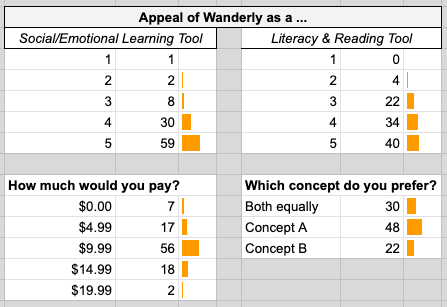
Another survey insight was that while social-emotional learning was meaningful, connecting with your child and helping them build confidence were more important; the “why” was more important than the “what”.
With clarity on direction, I moved into the next phase: actually marketing Wanderly as a social-emotional learning tool.
Translating a Concept into Words & Feelings
“Social-emotional learning” isn’t a user need; it’s a category or a noun. I knew from my user interviews that Wanderly met a need in managing “big feelings”, but I needed to spend more time articulating the core need so that I could build on it for marketing.
I initially got trapped in trying to describe Wanderly in terms of features, but good marketing shows you how you’re going to feel after using a product… once your problem is solved. Rather than focusing on features and the educational process (e.g., when a child is trying to name their dysregulated feeling), I tried to leverage the insights from the parenting needs section of my first survey. I focused on the goal of a child demonstrating self-regulation and confidence, and what the parent would feel like if Wanderly reduced the strain of “big feelings” moments and allowed them to connect more effectively with their child. But more than anything, I experimented a LOT, and each experiment refined my own understanding of Wanderly.
I ended up testing 6 taglines and 4 different “benefit” packages. I came up with 5 taglines and 3 benefit packages myself, and I also mocked a tagline and benefit package created by AI using the free-text responses to “What stands out to you about this concept?” from my previous survey. Then I presented these packages as wireframes via another Prolific survey. Below was the winning tagline mock:
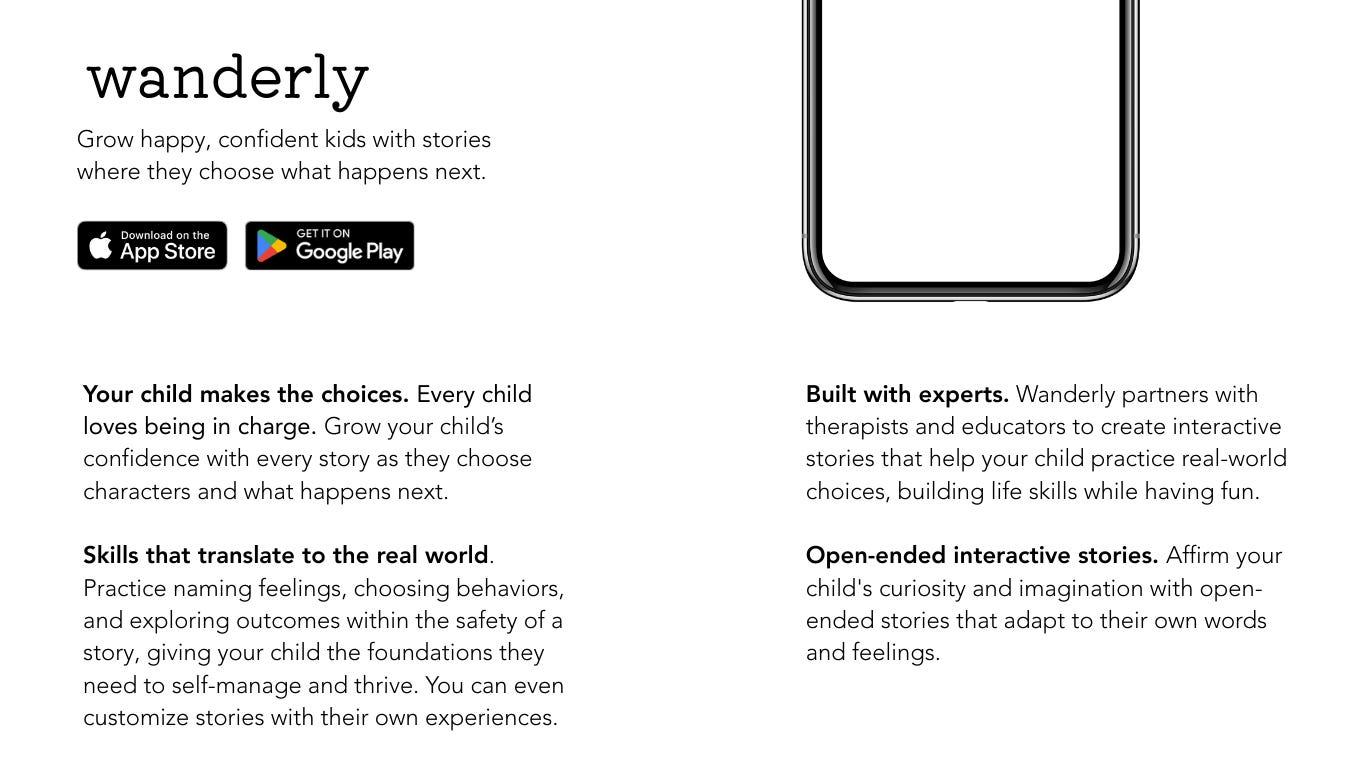
Thankfully, the winning tagline, “Grow happy, confident kids with stories where they choose what happens next,” is one I wrote myself. I can’t be fully replaced by AI… yet. :)
I also got good feedback as to which benefits resonated the most.
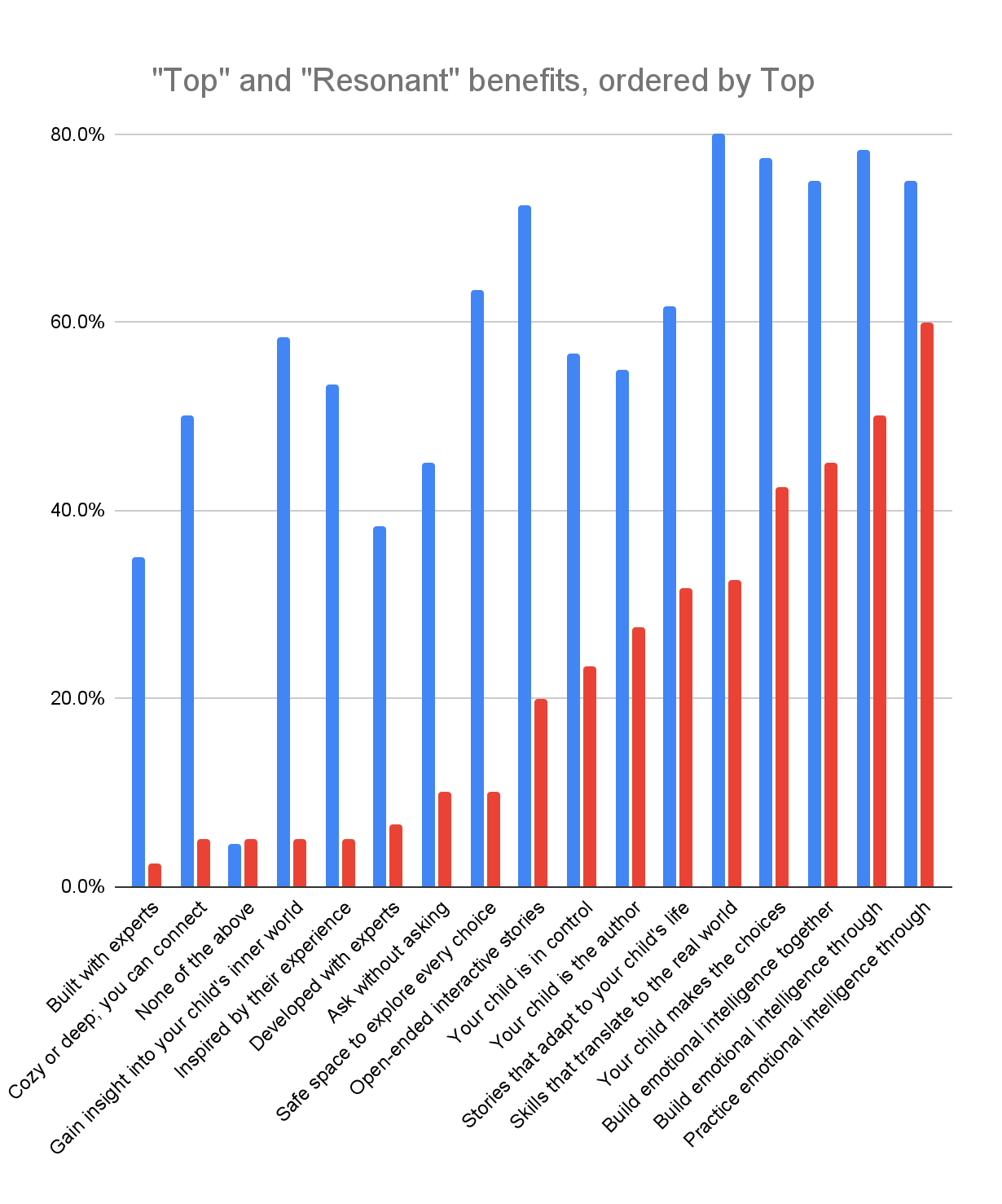
It was clear that building emotional intelligence through play (i.e., through interactive stories) was a top benefit, followed by child agency and real-world applications. In a follow-up analysis, partnership with experts was important for people with a higher willingness to pay.
Once I had some words, the next thing to tackle was feeling. The words would be useful only if someone wanted to read more; I had to craft a compelling emotional hook to encourage people to read them in the first place.
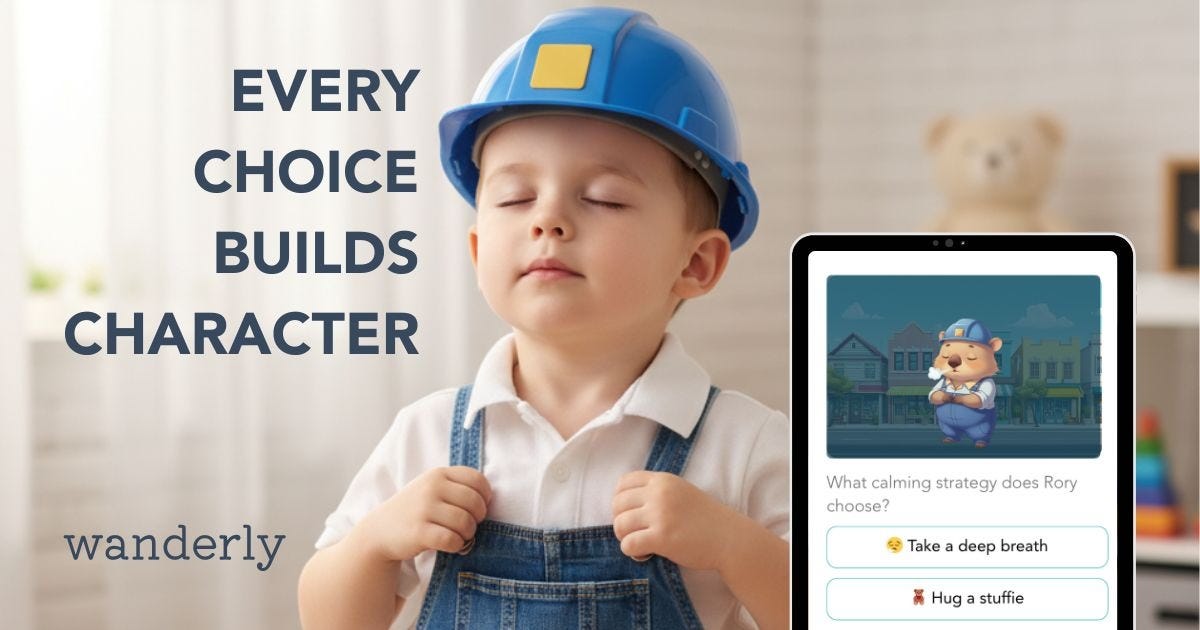
Ultimately, I landed on this concept:
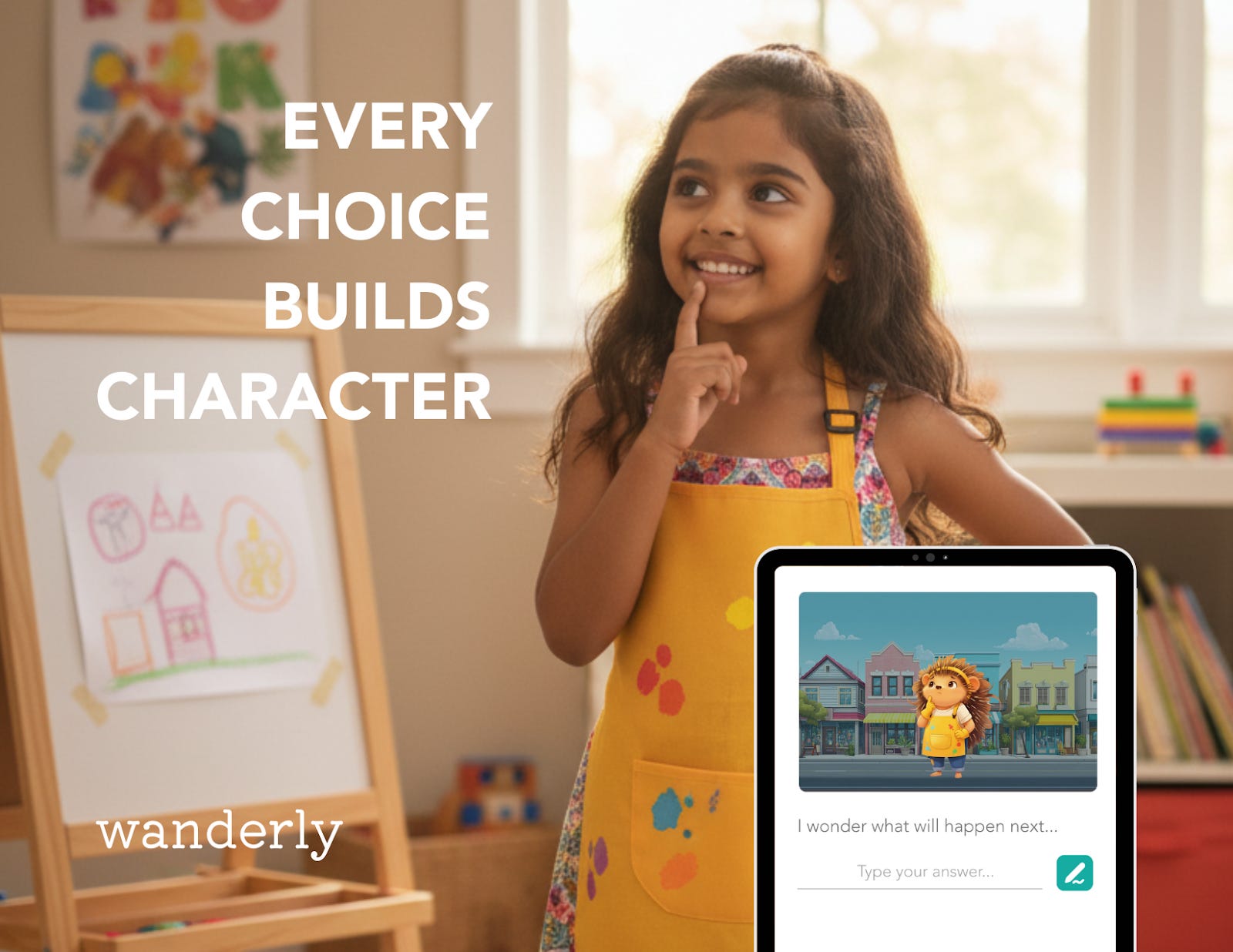
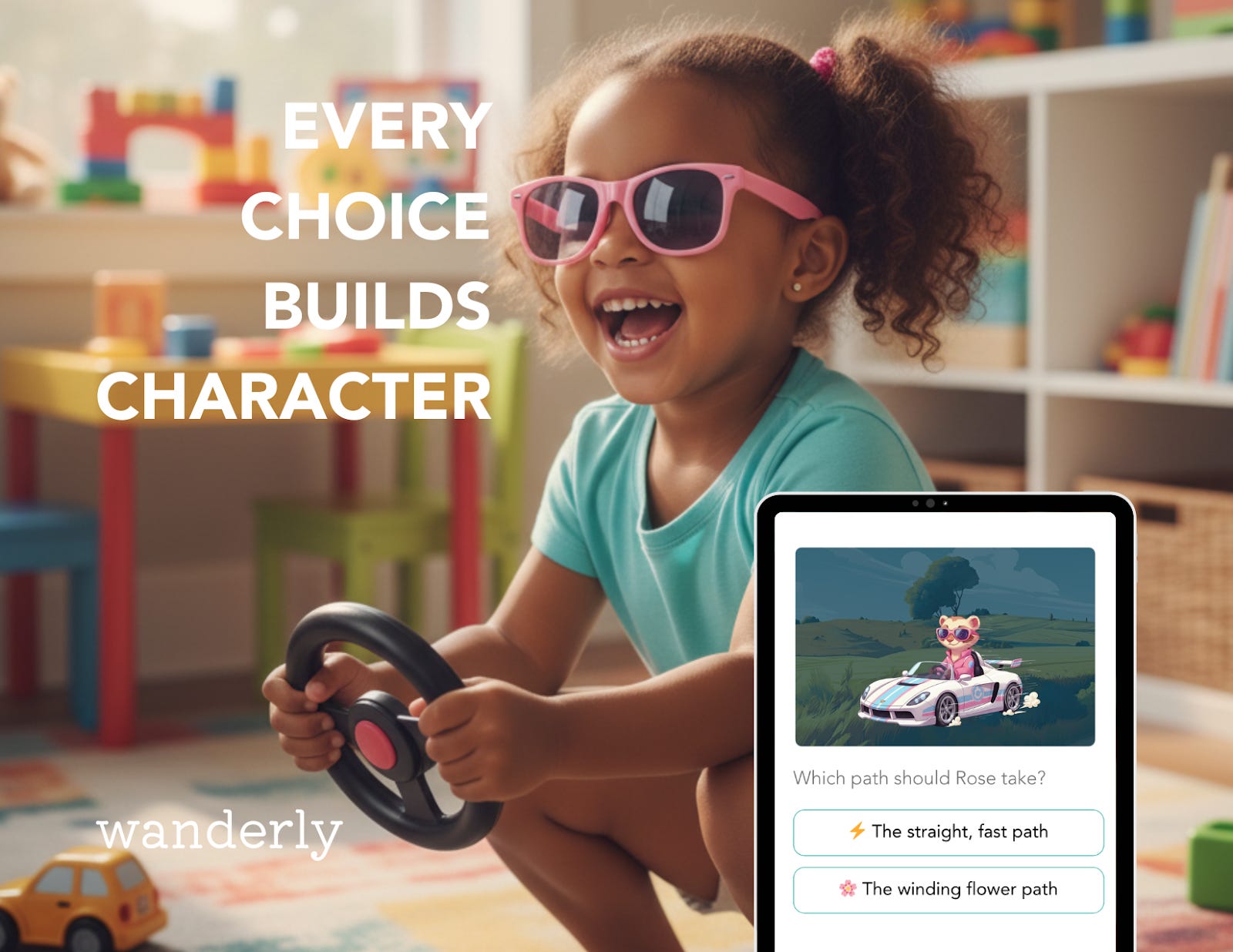
It shows the app, demonstrates the connection between in-app and real-world behavior, and creates a reusable template that depicts the child demonstrating emotional intelligence (e.g., theory of mind, self-regulation, imagination). Hopefully, it also feels fun and playful.
I’m not sure this is the right ad creative, but it’s a place to start. 🙂
I’m beginning to rebuild my entire marketing flow, content, and product toward this new direction. I’ve already updated my website, am working on my app store listings, and have just created flyers for community marketing. I’m working with a small crew of therapists and social workers on stories, and I plan to overhaul my app onboarding and email campaigns in the coming months. And I’m hoping to run some workshops in my local community.
If you’ve gotten this far, I’d love to ask for your help:
Know a great child therapist, social worker, or special educator? I’d love an intro.
Have a relationship with a place where I could market? E.g., A school, a library, a doctor’s office, a community center? I’d love an intro.
Interested in product design? I’m looking for folks who would be willing to audit my website and/or onboarding flow in the coming months.
And if you’re a parent, send me any story topic requests. 📚
This is probably my last post of the year, so thanks to all for your continued support and readership! I hope you are all surrounded by those you love, and that the coming year brings you positive change, growth, and happiness. ❤️ 🙏
Brilliant shift!